
 E-Paper




Aadhaar card not conclusive of birth proof, rules Delhi high court
The court was hearing a petition filed by M/S JJ Electronics challenging a Delhi Labour Court order passed in favour of its former employee.

 Prefer HTon Google


The Delhi High Court has held that an Aadhaar card cannot be treated as conclusive proof of date of birth, noting that its primary purpose is to establish identity.
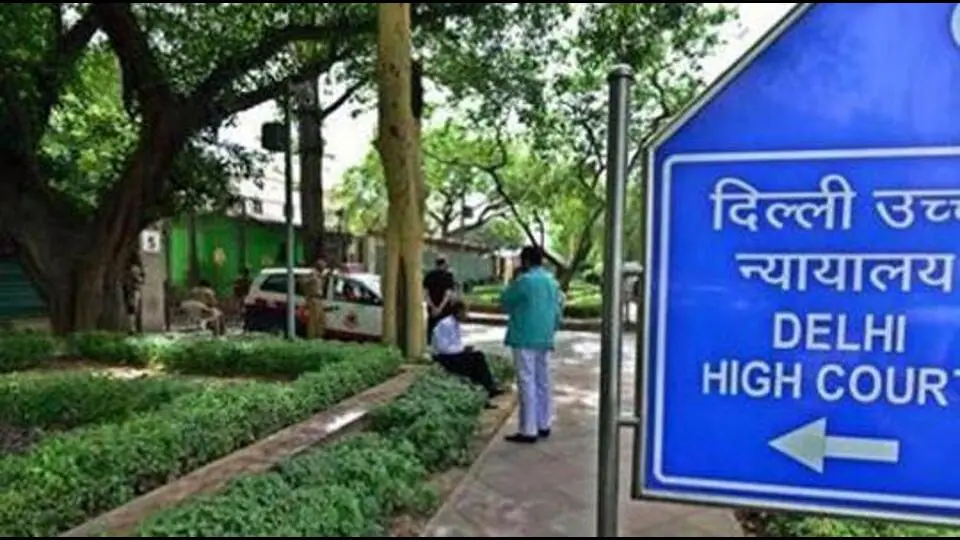
A bench of Justice Manoj Kumar Ohri, in a verdict released on November 14, said that when records show conflicting dates of birth, their evidentiary value must be examined before a conclusion is reached.
“An Aadhaar card, by itself, is not proof of date of birth. The Office Memorandum dated 20.12.2018 issued by UIDAI, which has been placed on record by the workwoman, clarifies the said position. It records that UIDAI enters the date of birth based on documents or self-declaration furnished by the cardholder. It further records that the Aadhaar Act, 2016 recognises an Aadhaar number as proof of identity, but does not mention that it can be accepted as proof of date of birth,” the court said in its November 13verdict.
Also Read | Delhi govt notifies Aadhaar authentication for Unified Data Platform
The court was hearing a petition filed by M/S JJ Electronics challenging a Delhi Labour Court order passed in favour of its former employee. The woman, who had worked at the establishment since December 1981 and was earning ₹10,500 a month, said her services were terminated on May 20, 2017, after she sought revised minimum wages.
The management said she had reached the retirement age of 58 that day, citing her Aadhaar card, which listed her date of birth as May 20, 1959. It also claimed that she retired voluntarily after a cataract surgery.
The Labour Court rejected the management’s claim. It noted that the employer had given her date of birth as May 20, 1960, when registering her with the Employees’ State Insurance Corporation (ESIC) in 2010.
The court found the termination illegal and awarded her full back wages from May 20, 2017 to May 20, 2018, when she would have attained the retirement age.
In its petition, the management argued that the woman had relied upon her Aadhaar card and that her employment ended upon superannuation and not through retrenchment. It also argued that the Labour Court was wrong in placing the burden of proving an admitted document upon it.
However, the woman submitted that an Aadhaar card cannot be treated as conclusive proof of date of birth.
The high court dismissed the petition, holding that the management’s challenge lacked merit.

Stay updated with all top Cities including, Bengaluru, Delhi, Mumbai and more across India. Stay informed on the latest happenings in World News along with Delhi Election 2025 and Delhi Election Result 2025 Live, New Delhi Election Result Live, Kalkaji Election Result Live at Hindustan Times.





