
 E-Paper






HT Explainers Desk delivers in-depth explainers and analysis on the stories shaping India and the world, from SimplyPut, Hindustan Times’ dedicated explainer section. The desk unpacks the science, policy, geopolitics and market forces behind major news events, breaking down complex developments into clear, accessible reporting for readers who want more than the headline. Explainers draw on the expertise of the journalists covering the story and insight from leading subject experts, translating specialist detail into plain language without losing precision or nuance. Coverage spans national and global news — from health and science breakthroughs to trade, technology, cybersecurity, aviation, energy and public policy — going beyond what happened to explain how it works, why it matters and what to watch next. Written for readers who want context, and not just the headlines, HT Explainers Desk brings together original reporting, data and expert analysis to make sense of the news as it develops. It is part of Hindustan Times, India's leading source for news, in-depth analysis and explanatory journalism since 1924.
Spain elections: What a government with the far right, a first since Franco, could mean
A PP-Vox coalition would give the far right its first role in government since Franco. The leaders who could run it, and the policies they back.


If the last opinion polls are right, Spain could have a far-right party in its government after Sunday’s snap election, for the first time since the dictator Francisco Franco died in 1975.

The opinion polls put the conservative People's Party (PP) at around 31% and the far-right Vox at about 18%. Almost all showed the two together as the only combination likely to reach the 176 seats needed for a majority in the 350-member lower house.
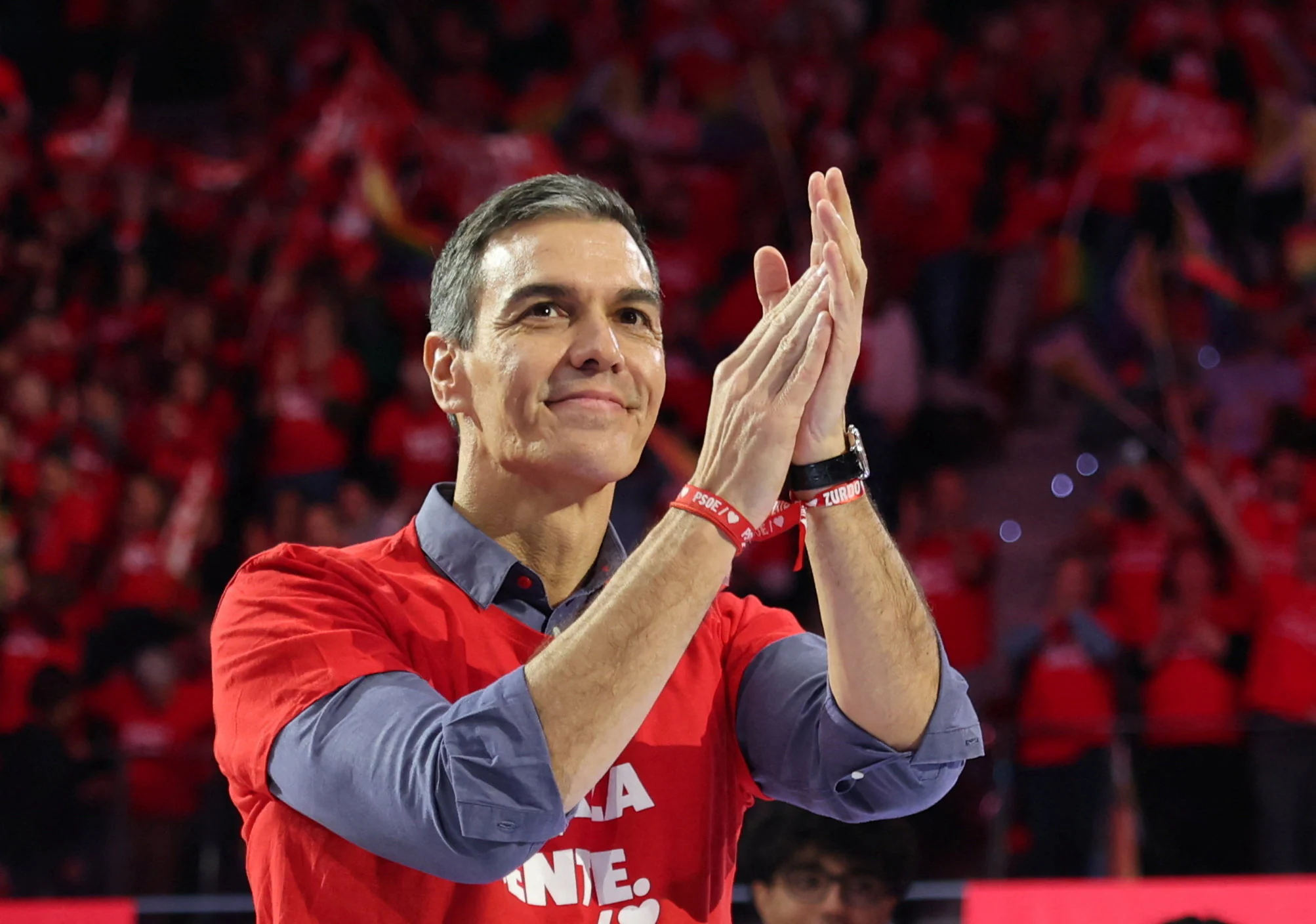
Prime Minister Pedro Sánchez’s Socialists, which has governed since 2018, were close behind at almost 30%. Sánchez remained defiant, saying his party’s internal data show it winning the most votes. “I can’t conceive of us losing,” he told radio station SER on Friday.
The PP also came first at the last election in 2023, yet its leader, Alberto Núñez Feijóo, could not gather enough support in parliament to become prime minister.
The two right-wing parties’ campaign promises suggest how far a government led by the PP and reliant on Vox could move Spain from the course Sánchez has followed.
A first
The last time the far right held power in Spain, the country was a dictatorship. General Francisco Franco ruled from 1939 until his death in 1975, and his regime executed and persecuted political rivals and abolished elections. Spain returned to democracy in 1978. In the decades since, voters wary of that past have denied far-right parties any share of national power, and a coalition with Vox could be the first break with the pattern.
The change appears to have begun in recent years, as anti-immigration politics gained ground across Europe and the US, and some Spaniards started looking for an alternative. Vox was formed in 2014 as a breakaway from the PP and spent its early years on the fringes. Its breakthrough came in 2018, when it won its first seats in a regional parliament in Andalusia, a Socialist stronghold since the 1980s. It has grown steadily since then into Spain’s third-largest party, and shares power with the PP in some regions. Pollsters credit younger voters and men with propelling its rise.
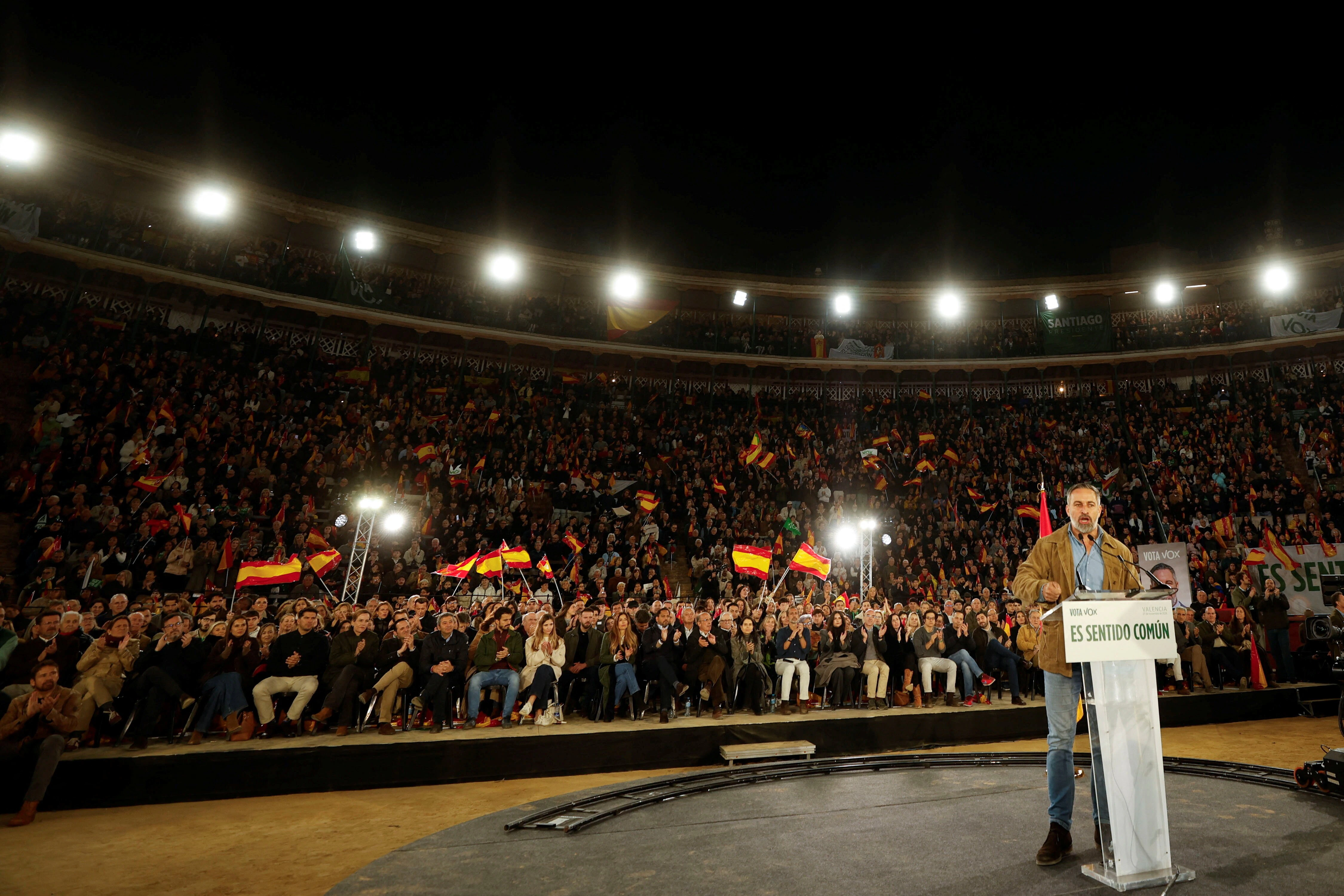
Its leader, Santiago Abascal, rejects the far-right label, saying that it is meant to denigrate Vox. Instead, he calls the party’s positions “common sense”, which is also the title of its manifesto. Nonetheless, political scientists place Vox to the right of Spain’s traditional conservatives, also pointing to the party’s refusal to back laws that protect women from gender violence.
Sánchez has invoked the Franco years in warning voters against a government that includes Vox. But such warnings may hold less sway with younger voters, many of whom have only a faint idea of life under the dictatorship, according to Montserrat Nebrera, a political analyst and former senior PP member in Catalonia. “People have lost their fear of what Vox is capable of and, despite its proposals, they think it will stay within the bounds of the traditional democratic state,” she told the Associated Press.
Also read: A big voter turnout tells how many voted in an election. It may not answer the ‘why’
The key faces
Feijóo, 65, would lead a PP government. A law graduate and career civil servant, he led his home region of Galicia, in Spain’s northwest, for 13 years and has headed the PP since April 2022. He presents himself as a capable manager rather than a speechmaker, and identifies with the party’s moderate wing while competing with Vox for conservative votes.
Abascal, 50, co-founded Vox and has led it from the start. The son and grandson of PP politicians, he grew up in the Basque Country during the violence of ETA, a separatist group that killed more than 850 people over half a century. ETA attacked his father’s clothing shop with Molotov cocktails and burned it down in 1999. Abascal left the PP in 2013 in protest at what he saw as its appeasement of separatists. His style is brash, and he calls the arrival of migrants in Spain an “invasion”. He counts Italy’s Giorgia Meloni and France’s Marine Le Pen among his political models.
In return for backing Feijóo, Vox would expect to join the government and push for a crackdown on migrants, AP reported. How much it can demand will depend on how many seats it wins.
Alberto Nadal, 56, a former secretary of state for budgets, is the PP’s top economic official. His Vox counterpart is José María Figaredo, 38, a lawyer and economist.
Also read: The sinking of a Russian warship in Libya and Ukraine’s drone strikes far from home
What could change
Migration
Sánchez is virtually alone among European leaders in defending migration as good for the economy. His government this year regularised the status of more than a million migrants who were living in Spain without papers.
Both right-wing parties want tougher rules. The PP has said it would link work visas to labour shortages and ban mass regularisations. It would also tighten asylum rules and speed up deportations, including to third countries.
Vox has said it would go further. It would end public benefits for undocumented migrants and deport foreigners convicted of crimes. Under a policy it calls “national priority”, Spanish citizens would get first claim on state aid and housing. Vox also proposes a “remigration” plan to shrink the migrant population while luring home Spaniards who left to find better pay abroad. The party has campaigned hard on the brief crossing of tens of thousands of migrants from Morocco into Ceuta, Spain’s city on the North African coast, in July.
Housing
Housing has topped voters’ concerns for more than a year, according to the state pollster CIS. Sánchez favours rent caps and bans on short leases. The PP has said it would repeal the recently approved Housing Law, which regulates rents, and has promised to build a million homes over four years. Vox wants to loosen land laws to speed up construction and give Spaniards priority access to housing. It has also promised to evict squatters within 24 hours.
Money
Both parties promise tax cuts, but Vox wants to go much further on spending. Figaredo told Bloomberg that Vox would review €224 billion in state subsidies and payments to Spain’s regions. Halving them would save €112 billion, about 7% of the country’s economic output, though he says core services such as health and education would be spared.
Sánchez warned in a televised debate earlier this week that cuts that deep would “drive the economy into recession”. Economists are sceptical too. Pablo Muylle, an economist at ING, said “Spain's relatively low level of public spending means there may be less scope for substantial savings”. Figaredo has also cautioned that “a revolution like the one we are proposing cannot be carried out in 15 days”.
Any new government would also have to answer to Brussels. European Union members have agreed in the bloc’s treaties to limit their government deficits, the gap between what a state spends and what it collects, as well as their debt, and the EU can start disciplinary action against a country that breaches those limits or is at risk of doing so. Spain, the fastest-growing of the big euro-area economies, is meeting its deficit target for now. But Valdis Dombrovskis, the EU’s economy commissioner, warned this week that if Spain fails to make adjustments for 2027, “this may lead to the opening of an excessive deficit procedure”, under which EU can give a country a deadline to bring its deficit down and impose a fine if it misses.
Energy and climate
The Socialist government plans to close all seven of Spain’s nuclear reactors by 2035. The PP would scrap that plan and extend the lives of existing plants, while Vox would build new reactors at existing sites and curb large solar and wind farms.
The two right-wing parties are split on the science. The PP broadly accepts that human activity is warming the planet. Vox denies it and calls the left’s policies “climate fanaticism”, according to Bloomberg.
Analysts expect Spain’s shift to clean power to continue whoever wins, though its pace may change. Wind, solar and hydro already supply about 60% of the country’s electricity, and new projects are being built without state support. “Whoever governs, neither of those two things is going to happen,” Javier Revuelta of the energy consultancy Wood Mackenzie told Bloomberg, referring to the Socialists’ target of 81% renewables by 2030 and Vox’s promise of new reactors.
Women’s rights
The PP and Vox also differ on women’s rights. Abascal rejects the concept of gender-based violence.
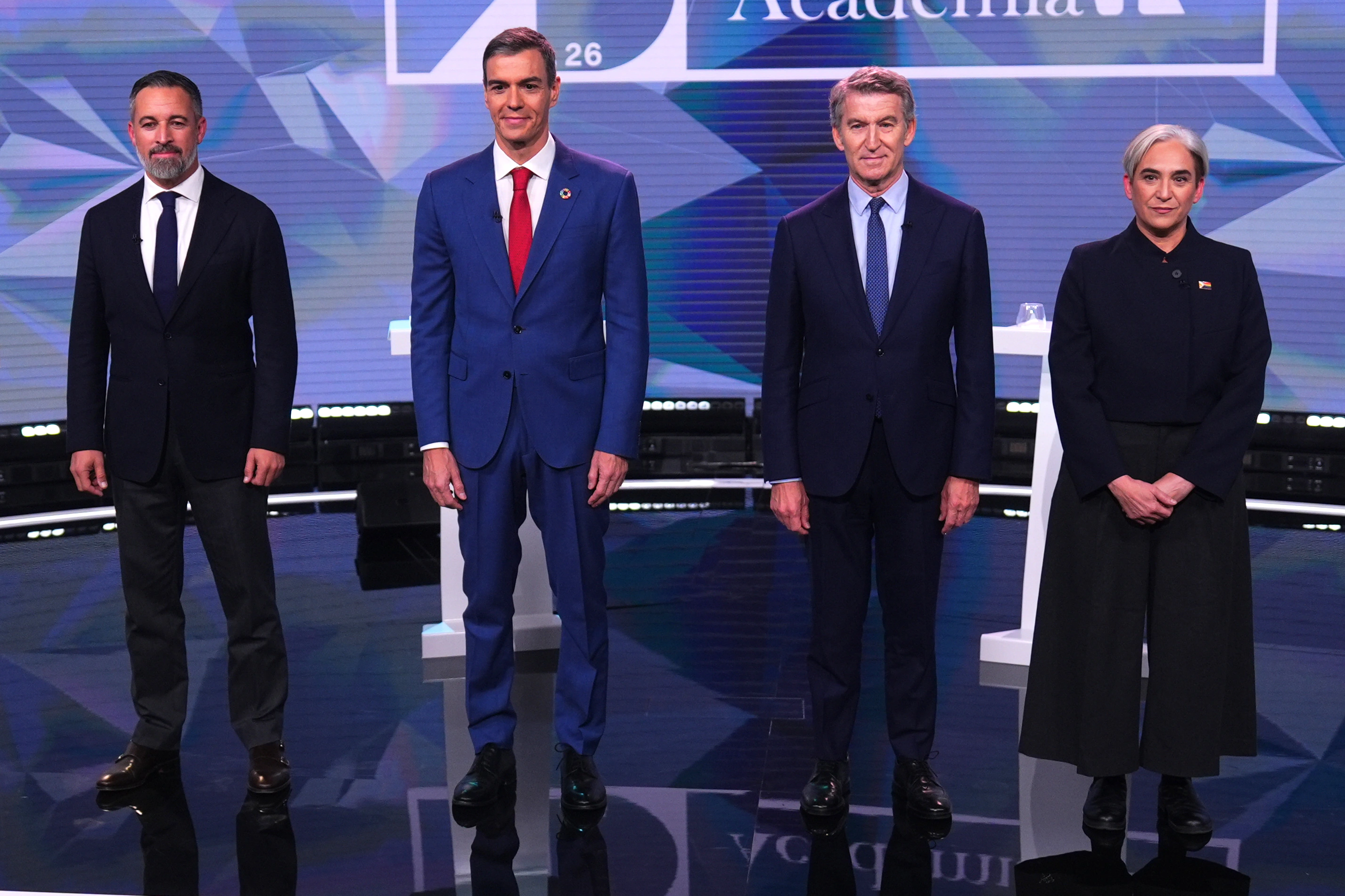
In Thursday’s debate, Sánchez and Ada Colau, a former mayor of Barcelona who is the candidate for the hard-left Broad Front, criticised the Vox leader for refusing to condemn it. The PP backs police, court and victim-support resources against such violence, though it has said it would amend Spain’s transgender law.
Vox supports what it calls the “right to life” and would protect conscientious objection to abortion, the right of doctors and other health workers to refuse to perform the procedure on moral or religious grounds.
The Socialists want abortion made a constitutional right.
Spain abroad and Europe
Sánchez has clashed often with US President Donald Trump, resisting pressure for more military spending and denying America the use of Spanish airspace in the war on Iran.
Feijóo has pledged to raise defence spending and repair relations with Washington. He also wants Spain to align more closely with the EU’s biggest countries, Germany in particular. He and German Chancellor Friedrich Merz belong to the same European political family.
Vox looks elsewhere for allies. Jorge Buxadé, a Vox member of the European Parliament, has built ties with the MAGA (Make America Great Again) movement in the US and with far-right parties such as Hungary’s Fidesz.
The two right parties are also divided in their approach towards Morocco. The PP wants a more balanced policy towards Morocco and Algeria, while Vox has said it would impose sanctions on the African nation until it respects Spain’s borders.
Tougher migration controls would bring Spain closer to Europe’s centre-right mainstream and could mean more cooperation on deporting migrants who arrive illegally, AP reported. The EU would also lose one of its leading champions on climate policy, according to Bloomberg. Steven Forti, a professor of political science at the Autonomous University of Barcelona, told AP that a PP-Vox government would “mean another step in the normalisation of the far right across Europe”. France, Italy and Poland hold national elections over the next 12 months.
What happens after Sunday
Even if the polls prove right, a new government would not take office for weeks. The new lower house meets on December 23, after which King Felipe nominates a candidate for prime minister, usually the leader of the party with the most votes. The nominee needs 176 votes in a first investiture vote, or more ‘yes’ votes than ‘no’ votes in a second. Coalition talks can take as long as the parties need, but a government must be formed within two months of the first vote, or Spain holds a fresh election.





