
 E-Paper






Debabrata Mohanty is a senior assistant editor of Hindustan Times who works as state correspondent from Odisha covering the state's politics, governance, public policy, natural disasters, environment and its society for close to three decades. With his long years of reporting from the state capital of Bhubaneswar, Mohanty has been known as one of the most experienced and credible journalists covering Odisha for the national English dailies. His reporting combines on-ground detail with deep institutional knowledge detailing the state's changing politics, governance issues, administrative reforms and the functioning of its public institutions. He has regularly reported on issues ranging from legislative developments and public policy implementation. Politics is his core areas of expertise as he closely tracks Odisha's political landscape, including the rise and transformation of the Bharatiya Janata Party (BJP), the Biju Janata Dal (BJD), the two principal political parties in Odisha. His long association with the state's political establishment enables him to write on contemporary developments in a larger political context. Mohanty takes a deep interest in writing human interest stories, environmental issues and documenting the impact of cyclones, floods, heatwaves, and other climate-related events in one of the most disaster-prone states. His coverage extends to public health, governance reforms and stories on accountability of government institutions. Before joining Hindustan Times, Mohanty worked with The Indian Express, Mail Today, and The Telegraph, where he covered at least six general elections and as many assembly elections. In 2007, he was selected for the prestigious Chevening Young Indian Print Journalist Programme at the University of Lincoln, United Kingdom, where he received advanced training in print journalism. In 2009 he won the Press Institute of India-International Committee of Red Cross award on conflict reporting for his on-ground reportage of 2008 Kandhamal riots.
Odisha women cops to get 12 days’ menstrual leave, exemption from strenuous duties if pregnant
Odisha Police has directed districts to grant women personnel 12 days of additional casual leave annually for menstrual discomfort and ease duties for pregnant and lactating staff.


Bhubaneswar The Odisha Police has advised district superintendents of police (SPs) to exempt pregnant and lactating women personnel, as far as practicable, from night duties and strenuous assignments, and ensure 12 days of additional casual leave annually for women to manage menstrual discomfort.
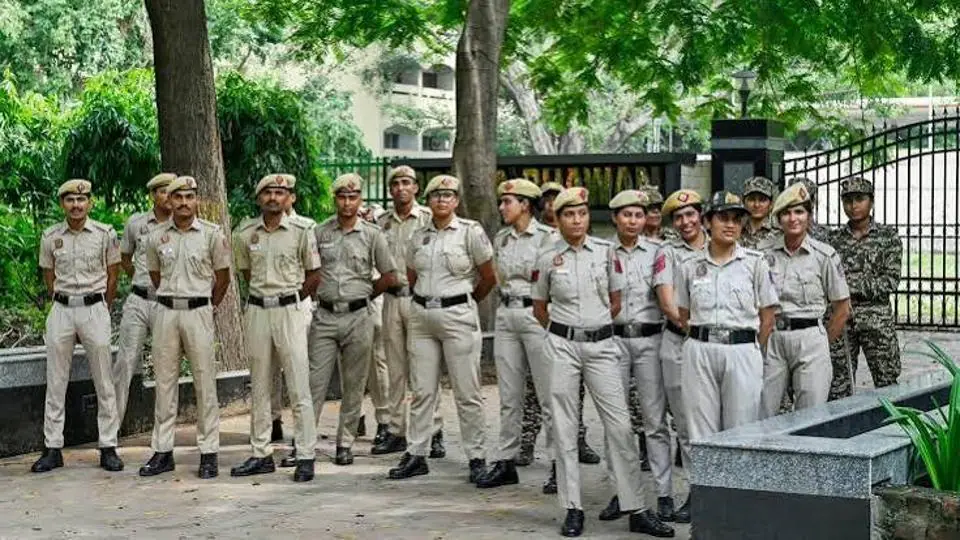
In a letter issued to district SPs on Wednesday, the Crime Against Women and Children (CAW & CW) Wing of the Odisha Police said pregnant and lactating personnel should be exempted from strenuous physical duties involving prolonged standing, physical exertion and law-and-order deployments.
Women experiencing severe menstrual discomfort may be assigned less strenuous duties, such as control room responsibilities, instead of physically demanding field assignments, wherever operational requirements permit, it said.
Citing the disproportionate burden of household and caregiving responsibilities on women, alongside the demanding nature of police service, including round-the-clock duties, night deployments, stressful working conditions and time-bound investigations, the wing said the combined burden of professional and domestic responsibilities adversely affected the mental health and overall well-being of women police personnel. It said this made it imperative to create a supportive and gender-responsive working environment.
The wing also noted that women police personnel in some districts were not being allowed to avail themselves of leave and directed all authorities to ensure that eligible personnel received the benefit upon application.
Citing a March 12, 2024, order of the state finance department sanctioning 12 days of additional casual leave annually for women government employees, the letter said women police personnel should be granted one day of additional leave every month to address physical discomfort during menstruation.
It also called for reasonable breaks and flexibility in duty timings for pregnant and lactating women to facilitate breastfeeding and childcare requirements, citing provisions of the Maternity Benefit Act, 1961.
“Nursing breaks should be allowed to enable mothers to attend to their infants. District SPs should sympathetically consider requests for additional leave supported by genuine grounds and medical certificates, particularly when women require more time for post-delivery recovery, breastfeeding or newborn care,” the letter said.
To address deployment-related grievances, district SPs have been asked to attach a woman sub-inspector, assistant sub-inspector or havildar to the Force Section in each Reserve Office. The designated officer will facilitate the appropriate deployment of women havildars and constables and escalate genuine grievances to the Reserve Inspector and district SP.
The directive also mandates the appointment of a woman officer of the rank of deputy superintendent of police (DSP) or additional SP as a well-being officer in every district. The officer will serve as a point of contact for women personnel and facilitate grievance redressal.
Besides ensuring separate, clean and hygienic toilets, SPs have been asked to provide separate changing rooms at all duty posts and restore women’s rest rooms that have been diverted for other purposes.
The directive also calls for regular gender-sensitivity training for supervisory officers, timely disposal of sexual harassment complaints under the 2013 law, and access to professional counsellors and psychologists for personnel facing mental health challenges.
District SPs have further been directed to earmark at least 15 minutes during monthly ‘Alochana Sabha’ meetings exclusively for interactions with women police personnel to discuss their gender-specific concerns and grievances.





