E-Paper




The right way to style console tables, coffee tables and shelves to make your home look more put together

 Prefer HTon Google


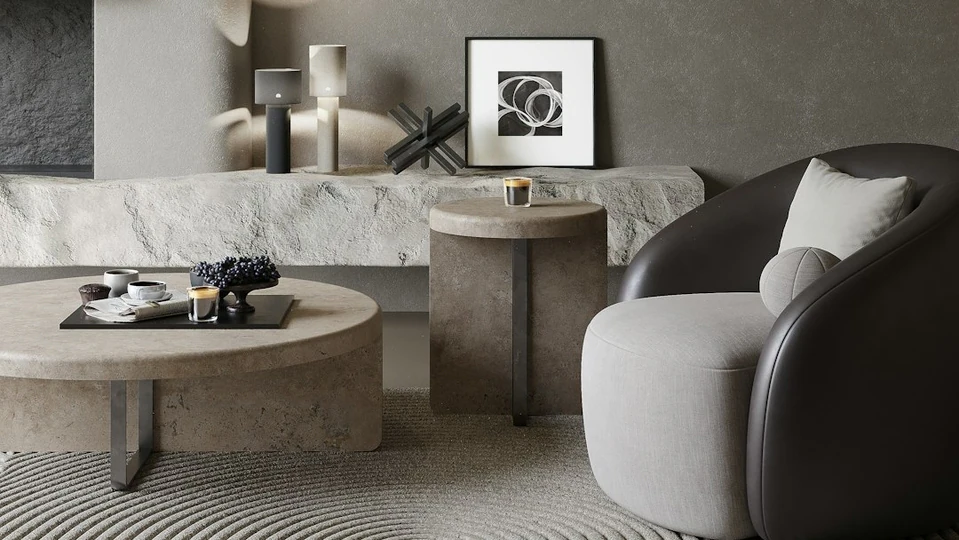
From console tables to coffee tables, here are simple styling tips to make every corner of your home look better.
Most people begin styling by shopping. The better ones begin by removing things. A console table, a coffee table and a set of shelves decide whether a room feels curated or cluttered, and the difference is rarely about what you add. It is about what you leave out, and how much space you give what remains. Hardesh Chawla, founder of Essentia Home, shared styling tips that can make every corner of your home look better.
The console table
According to Chawla, the console usually greets you at the entrance or sits behind a sofa, so it sets the tone for everything that follows. Build in layers and vary the height. Begin with something tall at the back, such as a mirror, a framed artwork or a slim lamp. Add a mid-height element, like a vase with a few stems or a sculptural object.

Finish with something low and practical in front, such as a tray for keys and a small bowl for loose change. “Keep the arrangement slightly off-centre, because perfect symmetry can feel stiff, whereas a balanced asymmetry feels natural,” suggests Chawla. Leave breathing room on the surface; a console that is only half-filled looks far more intentional than one that is crowded.
The coffee table
The coffee table is the most-used surface in a living room, so it has to work as hard as it looks. According to Chwala, anchor it with a tray, which instantly groups objects and makes the arrangement look deliberate. On it, place a stack of two or three coffee-table books, topped with a small decorative piece, and one living element, such as a low planter or a bowl of seasonal fruit.
Mind the scale. Keep the centre of the table slightly open so there is space for cups, a laptop or a board game. “Choose pieces that sit lower than eye level when you are seated, so conversations flow across the table rather than around it,” said Chwala. Texture also helps: pair a smooth ceramic with a woven basket or a wooden bowl for depth without adding colour.
Shelves
Shelves are where most people go wrong, treating every inch as storage. The most elegant shelves follow the two-thirds rule: fill roughly two-thirds of the space and leave the rest empty. That negative space lets each object breathe and draws the eye to what matters. Mix books stacked horizontally and vertically to create rhythm.
Group objects in odd numbers, as threes and fives feel more organic than pairs. Layer frames against the back, place smaller objects in front, and repeat a colour or material across different shelves so the whole unit reads as one composition. Add a plant or a piece of trailing greenery to soften the lines. Include things that mean something to you, such as travel finds, family photographs or a handmade piece, because a styled shelf should still feel lived in.

Tie it together
The common thread across all three surfaces is consistency. Choose a limited palette of two or three tones, repeat a material such as brass, timber or stone, and vary scale and height. When the surfaces echo one another, the room feels cohesive even if every object is different. “Styling begins with editing.
"As a maker, I see how much thought goes into the depth, height and proportion of a surface, and that is the first thing a crowded tabletop hides. Choose fewer, better pieces, give each one room, and the furniture looks more refined, and the home feels calmer,” said Chawla.