
 E-Paper




In Sinner and Alcaraz injuries, the test to follow in the Big Three’s footsteps
Longer matches, a packed calendar and more physically exhausting matches seem to be taking a toll.




Mumbai: Jannik Sinner hasn't stepped on court for a competitive match since July 12. With the Italian confirming surgery on his troublesome knee on Tuesday, it will be a while — possibly up to three months as Sky Italy reported — before he plays again.
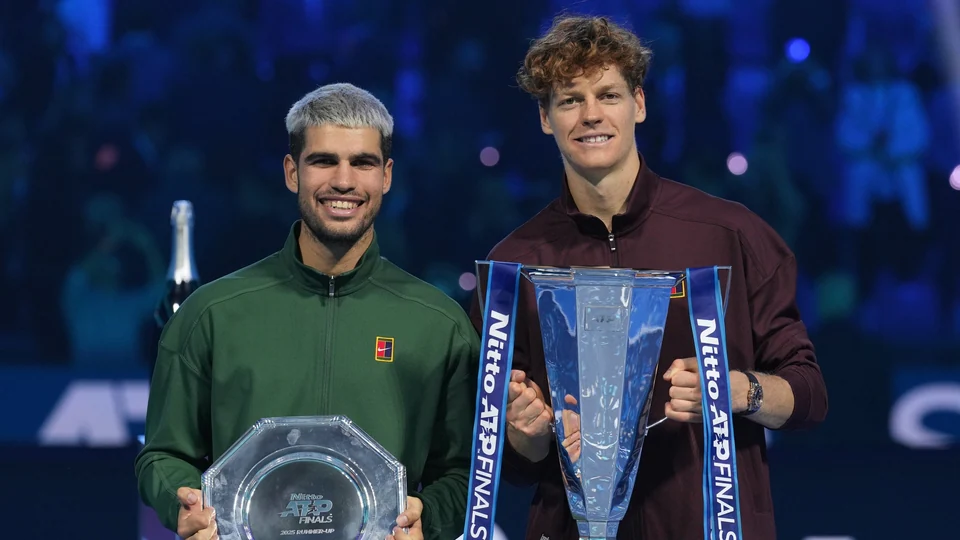
By all accounts, not least the Australian Open's official one on X that said "we'll miss you this summer," the world No.2 is likely to be out of next year's first Grand Slam after skipping this year's last. The world No.3, Carlos Alcaraz, sat out of the middle two.
This is a 25-year-old and a 23-year-old, two of the most sublime and successful young players whipping up a spellbinding rivalry of this era, in danger of being a no-show in four Slams on the bounce combined, and back-to-back each.
Sinner and Alcaraz hogged 10 of the 12 Slams in the last three years (Alexander Zverev cashed in on their absence to take his share this season) as their stature and rivalry surged. As the two increasingly fight physical breakdowns amid stretching calendars and matches, matching that in the next three years will take some doing.
Alcaraz, the youngest to complete a career Grand Slam, has seven majors. Sinner, the youngest to achieve a career Golden Masters, has five majors. Whether they keep up and stay fit going ahead could dictate if their dominance and rivalry can follow in the footsteps of the Big Three.
The alluring aspect about the legend of Roger Federer (20 Slams), Rafael Nadal (22) and Novak Djokovic (24), in their individual records and rivalry, was that it kept delivering. And it kept coming. Slam after Slam, season after season. From Federer and Nadal brewing something special at the start of the century to the trio pushing each other to the hilt through the next decade, to Djokovic and Federer producing a Wimbledon spectacle towards the end of the last decade.
More time on court, less time to recover
One of the common grievances among current players is that they are playing too much tennis. Here's something to ponder: in the fifth full season after competing in main draws of Slams for the first time, Sinner turned up for 79 matches in 2023 while Alcaraz competed in 80 in 2025.
The Big Three? Djokovic played 97 matches in 2009, Federer 95 in 2003 and Nadal 85 in 2007.
This reflects that the workload volume hasn't ramped up; if anything, top players in the previous era played more.
What has, though, is the workload intensity and duration.
According to a June 2026 study published in Scientific Reports that examined roughly 1,98,000 ATP matches from 1968 to 2025, tennis matches have become longer by around 16.5 minutes on an average since 1991.
As per a 2023 article in The Athletic quoting sourced ATP data, the average length of a men’s Grand Slam match increased from two hours and 21 minutes in 1999 to two hours and 54 minutes in 2023, an average of more than half-an-hour per match. This year's French Open had 20 matches after three men's singles rounds that dragged on for over four hours. The ATP said it was the most on record in a single Slam since 1999.
The surface-specific rise in match duration is more revealing in the Scientific Reports study. The largest cumulative spike came on grass courts (+21.0 minutes), followed by hard (+16.2 minutes) and clay (+12.3 minutes). A surface traditionally associated with quicker play and shorter rallies increasingly feels slower, longer and more similar to the other two.
"Recent meta-analyses substantiate that these adjustments prolong rally lengths and amplify physical demands," the study stated. It added that "scheduling and rest-day allocation may need revisiting as matches grow longer across all surfaces".
Three of the four Slams now have an extra day with a Sunday start. Seven of the nine ATP Masters events throughout the season are currently played across two weeks (12 days) compared to one week previously. Eight of those tournaments are mandatory for the top players, most of whom also sign up for financially attractive exhibitions.
Time spent in tournaments and on court has extended. Off-season duration, the best window for players to rest, rebuild and rev up physically, has shrunk. It’s in these times that Sinner and Alcaraz, exhausted, injured and sidelined at different points this year, face the challenge of keeping their bodies fit and firing.





