
 E-Paper




World Chess Championship: The calm before the storm
Gukesh looks calm, composed and, above all, much more measured in his decision-making.




The opening three games of the Gukesh-Sindarov World Championship match feels like two warriors circling each other, probing for weaknesses, testing their opponent's resolve and waiting for the slightest opportunity to strike. Neither has managed to land a decisive blow yet, and the score remains level at 1.5-1.5. This is a familiar start to a World Championship battle. Six of the last seven World Championship matches have been tied after the first three games. The early stages of these contests are often less about establishing dominance and more about understanding what the opponent has come up with.
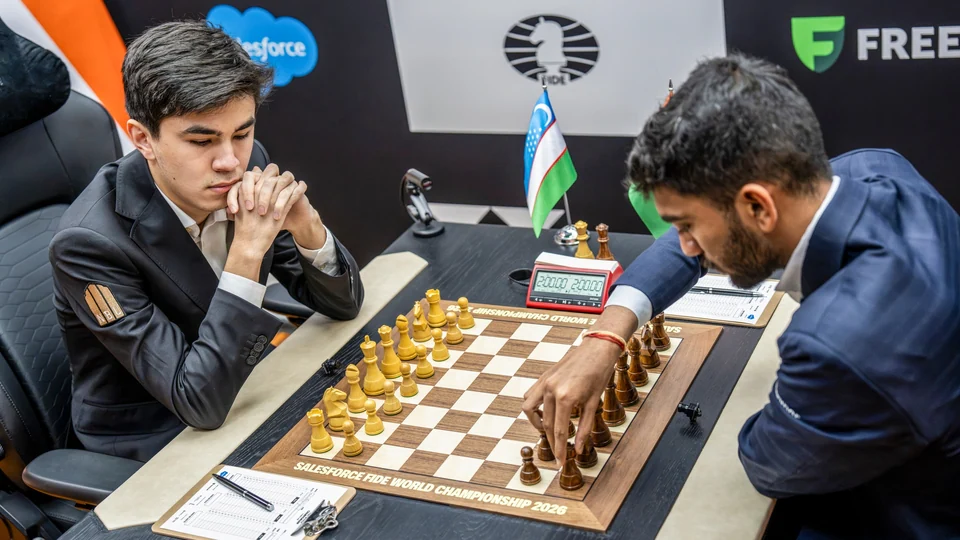
A different Gukesh takes the stage
What has particularly been noteworthy is the quality of Gukesh's play. It has been a considerable departure from what we have seen from him for much of the year. The games have been of a very high standard, but perhaps more importantly, there is a maturity to his approach that seems to have reached a new level. He looks calm, composed and, above all, much more measured in his decision-making. His risk management appears to have improved considerably, as illustrated by Game 2. It reminds me of 2012, when Viswanathan Anand had not enjoyed the best of years but nevertheless turned up to produce an excellent performance in his World Championship match against Boris Gelfand. Gukesh’s approach of chilling in the last few months seems to be working well for him!
Sindarov, meanwhile, came out fighting. He made his intentions clear in the first two games, particularly in the first game, where he managed to put Gukesh under some pressure. But Gukesh showed excellent accuracy and composure to navigate the difficulties. The second game, on the other hand, was not much of an attempt by Gukesh to put his opponent under pressure with the White pieces. This was a display of maturity in its own way. Gukesh had lost with White in the opening game of his previous World Championship match against Ding Liren. Ding himself had suffered the same fate in the first game of the 2023 match against Nepomniachtchi. Having experienced how quickly things can go wrong, even when you are the one playing White, Gukesh seemed determined not to repeat that mistake. Sometimes, knowing when not to push is just as important as knowing when to attack. As Sun Tzu once remarked, “He will win who knows when to fight and when not to fight.”
Also Read - World Chess Championship: Now, Berlin with Rio variation too produces a draw in Game 3
Inspiration from Spassky
The third game was the game when Gukesh struck first against Ding in the 2024 match. Once again, he produced his most impressive performance of the contest so far in the third game of the match. He surprised Sindarov in the opening with a relatively obscure line that had last been played by former world champion Boris Spassky way back in 1988. The position offered interesting strategic possibilities, and Gukesh's team had clearly done some excellent work with the help of a modern Stockfish. Sindarov, who looked invulnerable so far, suddenly found himself on unfamiliar territory, having to think for himself rather than rely on his preparation. He did not appear entirely comfortable in this situation, and the time he spent trying to find his way eventually caught up with him. Sindarov likes to play fast, and pace around, and this forced him to spend more time sitting on the board and thinking. The opening surprise and the subsequent time trouble offered everyone the first glimpse into some of Sindarov's vulnerabilities.
This is perhaps the most we can hope to extract from opening preparation at the highest level these days. There was a time when we would occasionally witness games being won straight out of the opening, even at the very top level. That possibility seems almost extinct now. The real battle is now about who can surprise whom, who can force the other to start thinking independently earlier, and who can dictate the nature of the position that emerges.
Sindarov was objectively never in serious danger. But World Championship matches, and chess between humans in general, are not played exclusively on the evaluation bar. The first game belonged to Sindarov psychologically, after he managed to put Gukesh under pressure. The third, in my view, belonged to Gukesh. He had managed to surprise his opponent, take him out of his comfort zone and demonstrate that he can create his own chances as well.
The fireworks ahead
What makes this match particularly exciting is that, despite the relatively balanced nature of the first three games, neither player seems content to settle for a quiet draw. Even in the third game, with the position objectively equal, both players showed considerable ambition in keeping the game going. There is a sense that the two are waiting for the right moment to unleash something special. It brings to mind the sixth game of the Carlsen-Nepomniachtchi match in 2021, when after a build-up of five draws, Carlsen went to extraordinary lengths to squeeze out a victory in what became one of the greatest World Championship games ever played. Gukesh has himself mentioned that game as a source of inspiration. Perhaps we are building towards something similar. Patience may play a key role in this fight. The first three games have given us a glimpse of the players' preparation, their psychological strengths and the different ways in which they approach risk. But the real fireworks are still ahead. The opening games are just the calm before the storm!





