
 E-Paper







Vishal Mathur is Technology Editor for Hindustan Times. When not making sense of technology, he often searches for an elusive analog space in a digital world.
 Trending News
Meta’s AI chief talks about superintelligence, even as Muse models trail rivals
As traditional AI benchmarks hit saturation, Meta’s Chief AI Officer Alexandr Wang argues that cracking the Riemann Hypothesis marks the definitive arrival of superintelligence.
Published on: Nov 23, 2026, 11:42:16 IST

Share via
Copy link
There is a sudden obsession with the Riemann Hypothesis across Silicon Valley, driven by two overlapping developments: the saturation of benchmarks, a concern also raised by OpenAI’s chief scientist, Jakub Pachocki, who today called for an industry-wide cap on AI development; and the narrative battle over Artificial Superintelligence (ASI). Alexander Wang, chief AI officer at Meta, now says superintelligence is arriving.
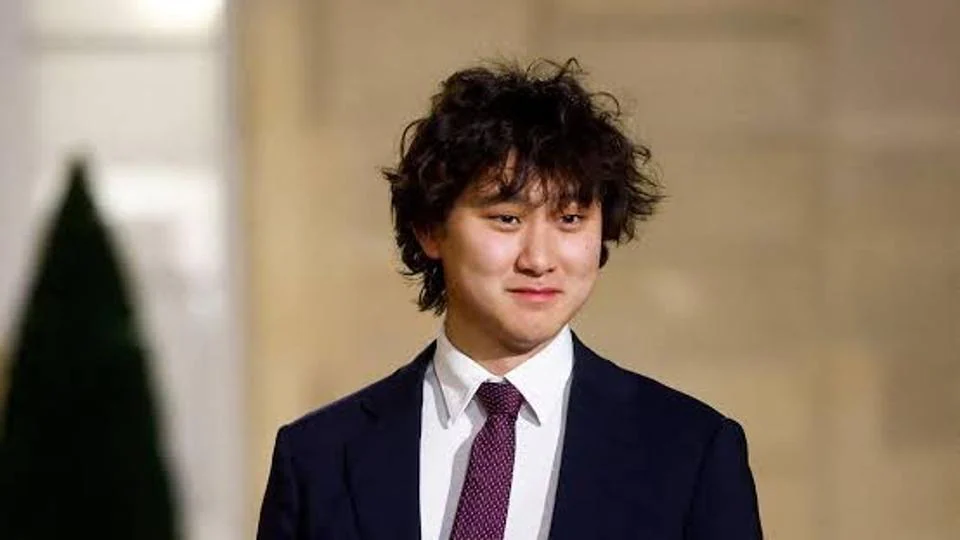
“As someone who has spent much of my life in math and science, I see the proof of the Riemann Hypothesis as clearly marking the beginning of a significant change. For most who have studied math, this represents the absolute pinnacle of intellectual accomplishment—nothing humanity has ever accomplished compares to proving the Riemann Hypothesis in terms of sheer intellectual might and strength,” Wang says in a post on X.
The Riemann Hypothesis was proposed by German mathematician Bernhard Riemann in 1859 and remains widely considered the most famous and consequential unsolved problem in mathematics. At its core, it is a question about the hidden pattern behind prime numbers—numbers like 2, 3, 5, 7, 11 and 13 that can only be divided by 1 and themselves. While primes appear to pop up randomly as you count higher, Riemann discovered that their distribution is deeply connected to the behaviour of a specific mathematical formula.
Deep Dive
Powered By
The Riemann Hypothesis is one of the seven Millennium Prize Problems, each carrying a $1 million reward from the Clay Mathematics Institute. Wang’s assertion is significant given that, a few days ago, Anthropic mathematician Levent Alpöge claimed he had proved one of mathematics’ most notoriously difficult problems with the help of Claude, something that has eluded some of the world’s best mathematicians for decades.
At the core of Wang’s argument is that this is an intellectual feat far surpassing the creation of the atomic bomb, achieved with the help of an “alien” AI mind, which marks the definitive arrival of superintelligence.
He insists that while acing the AIME math competition in late 2024 signalled that AI had surpassed the raw cognitive demands of day-to-day engineering and business, solving the Riemann Hypothesis now demonstrates that AI has exceeded the intellectual difficulty of nearly every major human field.
“There of course is domain-specific knowledge, context, know-how, and other tactical constraints that were needed to unlock the models across other areas, but lack of raw intelligence was not the bottleneck,” he writes.
Wang believes Recursive Self-Improvement, or RSI, is imminent. AI models will soon automate their own improvement, accelerating advances in different fields. “The models are clearly going to be intelligent enough to automate all of AI research and be clearly superhuman at improving themselves—along with massively accelerating biological research, weapons research, economic research, and more. The implications are enormous,” he says.
Wang says this will play out in two different ways: first, it is hard to imagine a world where humanity maintains control over superintelligence that is 1,000 times smarter and more capable than humans in every field; second, how humanity acts over the next year will have major consequences for the kind of future world we live in.
This also raises questions about the apparent AI industry approach of treating ASI as inevitable and focusing solely on technical safety, which Wang terms “lazy”. It will need a different approach from what we have seen so far. “We should not be okay with a ‘handover’ of society to AI,” Wang says.
It is not clear whether any of Meta’s AI pursuits have brought it close to achieving ASI, despite the company’s public discussion of its arrival. Also, Wang does say that “the discovery of the atomic bomb is a homework problem compared to the Riemann Hypothesis.”
In the latest Artificial Analysis Intelligence benchmark, Meta’s best-performing model is Muse Wonder Full (max), which scores below Anthropic’s Claude Fable 5.2, OpenAI’s GPT-6.2 Astra (max), Google Gemini 4 Neon (xhigh), Claude Opus 5.5 (max) and GPT-6.2 Sol (max).
ABOUT THE AUTHOR

Get the latest World News, breaking headlines, and real-time coverage from key global hotspots, including the US News, Russia, Ukraine, Iran News, and the UAE News. Track developing conflicts, high-stakes diplomacy, and major international events on Hindustan Times.





