E-Paper







Jasjeev Gandhiok is an Assistant Editor with Hindustan Times, where he covers environment, climate change, the clean energy transition and wildlife at the National Bureau. Gandhiok has over a decade of experience in journalism and is based in Delhi. He has reported extensively on Delhi and the National Capital Region (NCR). This includes the region's air pollution woes, a polluted Yamuna and on urban wildlife still thriving in the region. He joined HT in October 2021. Prior to that, he had five-year stint at The Times of India in Delhi, where he also covered Delhi, with a focus on environment and wildlife. Gandhiok has covered some recent events around the Capital too, ranging from the farmers' protests, the northeast Delhi riots and the CAA-NRC protests, reporting from the ground on all of these. He also travels across the country to report on how environment and climate change impact everyday life, while also writing on endangered species. His reports in 2019 on toxic leachate from Delhi's landfills led to the National Green Tribunal (NGT) taking suo motu cognisance and ultimately asking the state government to start bio-mining to flatten and remove all three landfills in the capital. He also closely tracks the implementation of government policies on climate, renewable energy and environmental protection. His focus remains on impactful, public-interest journalism which explains how environmental decisions affect people's everyday lives.
 Trending News
Talks go into overtime as COP31 deal remains elusive
A group of countries from Europe, Africa, Latin America and the Pacific, led by France and Panama, challenged the proposed agreement, demanding explicit action on fossil fuels and stronger climate finance


New Delhi: The UN climate conference COP31 in Türkiye’s Antalya went into overtime on Friday after nearly 200 countries failed to reach a consensus before the scheduled close at 6pm local time, with negotiations expected to continue into Saturday, officials said.
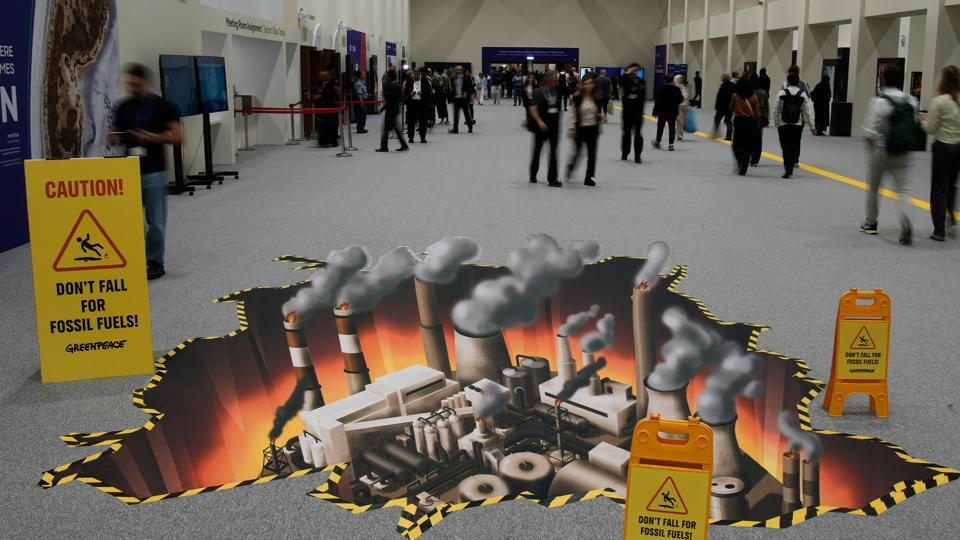
The sticking points remained those in the second draft of the summit’s cover decision, released by the COP31 presidency on Thursday, which dropped all references to fossil fuels and a $120 billion annual adaptation finance target that developing countries had sought. Countries, ministers and climate activists pushed back hard against the draft on the final day.
“Negotiations will continue into Saturday, to iron out all aspects. A final draft is more likely on Saturday than late into Friday,” a UN official in Antalya told HT, asking not to be named.
A group of countries from Europe, Africa, Latin America and the Pacific, led by France and Panama, challenged the proposed agreement, demanding explicit action on fossil fuels and stronger climate finance.
“We cannot tell the world we are now getting to 1.5 degrees and then do business as if nothing was happening,” said Monique Barbut, France’s minister for ecological transition.
Panama’s environment minister Juan Carlos Navarro said: “It is not acceptable to have a COP or a cover document that does not even mention fossil fuels, and we simply will not put up with it.”
The demand goes against India’s stated position. Ahead of COP31, Union environment minister Bhupender Yadav had said India would not support a phase-out of fossil fuels or a roadmap towards one.
Activists from the Climate Action Network (CAN), a global network of climate groups, held a separate press conference, holding black signs reading “shame”. “There is nothing on the table that protects people or addresses the priorities of the Global South,” said Tasneem Essop, executive director of CAN International.
CAN also gave its “Colossal Fossil” award to COP31 itself. The group presents the award at the end of each COP to those who have done the most to undermine progress. After two weeks of handing out Fossils to governments blocking climate action, it said it had finally found a winner big enough.
“The COP Presidents want to tell us this has been a great COP. Well, I can tell you without any doubt that this has been the worst COP ever,” said Mohamed Adow, founder of Power Shift Africa.
Avantika Goswami, programme manager, climate change, at the Centre for Science and Environment (CSE), accused developed countries, particularly European Union member states, of blocking substantive discussions while posturing in the media. “When the time comes to show up and enable all the moving pieces that will help us avert the climate crisis….that is when they act in bad faith and play destructive games,” she said.
Chris Bowen, COP31 president of negotiations, said the presidency remained optimistic of a strong outcome. “There is still a spirit of making it work… But no one has said to me, let’s give up and go home,” he told reporters.
The nine-page draft also softened the language on trade and removed the commitment made at COP28 in Dubai in 2023 to transition away from fossil fuels, along with references to Brazil’s fossil fuel and deforestation roadmaps from Belém last year. It keeps the call to at least triple adaptation finance by 2035, repeating the Belém decision, and proposes an “Antalya-to-Addis Ababa Roadmap” to identify larger sources of adaptation funding.