
 E-Paper




Delhi's AQI ticks into ‘very poor’ after 8 days as winds halt
The air quality index stood at 329 at 8pm, according to HT’s pollution dashboard, which calculates the index from the Central Pollution Control Board’s.




Delhi’s air quality slipped into the “very poor” category on Saturday, after eight days in “poor”, as still weather conditions and a low layer of warm air held the city’s pollution close to the ground.
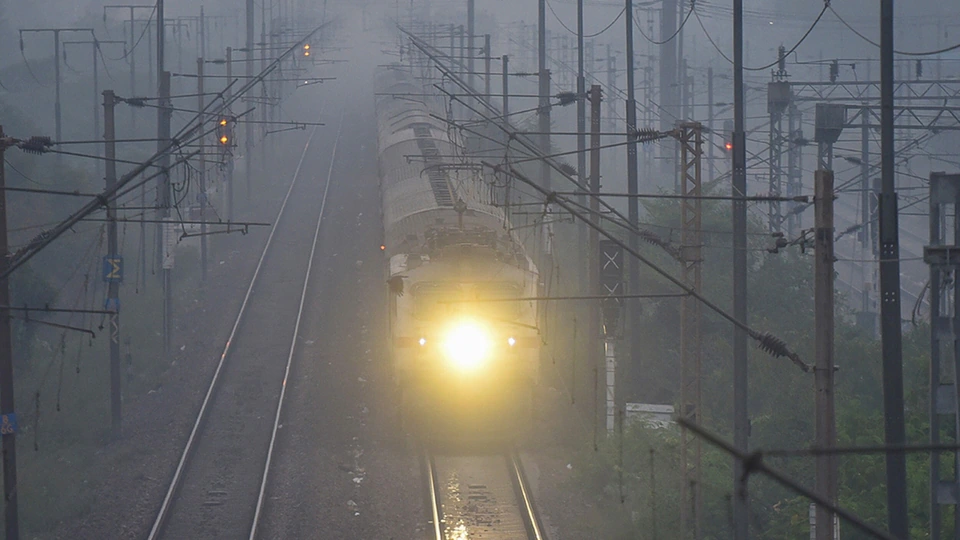
The air quality index (AQI) stood at 329 at 8pm, according to HT’s pollution dashboard, which calculates the index from the Central Pollution Control Board’s (CPCB) station readings using the formula the board publishes. It crossed into “very poor” at 1pm, at 301.
CPCB’s official daily bulletin, issued at 4pm, put the AQI at 298, in the “poor” band. The board’s own hourly figure crossed into “very poor” by 6pm.
How AQI is read
The AQI turns readings of the main pollutants into a single score from 0 to 500, averaged over the previous 24 hours. A score from 301 to 400 is “very poor”, a level at which CPCB warns of respiratory illness on prolonged exposure.
Because it averages a full day, the index lags behind the air and can keep rising for hours after the air begins to clear.
CPCB’s figure is lower because the board scores each hour’s reading and then averages the scores, while its published formula averages the day’s pollution first and then scores it, the approach HT’s dashboard follows, as HT reported this month. On Saturday, that difference put the city in “poor” by CPCB’s approach and “very poor” by HT’s.
Pollution rose steadily from Friday evening. PM2.5, fine particles 2.5 micrometres across or smaller that can lodge deep in the lungs, averaged 60 micrograms per cubic metre at 6pm on Friday across the 48 stations that reported in every hour, HT’s analysis shows.
Also Read I The AQI paradox: Why the official count may be downplaying the pollution problem
It reached 158 by midnight and 205 at 11am on Saturday, more than three times India’s limit of 60, which is set for a 24-hour average. At 11am, 13 of 58 stations read above 250, the level at which PM2.5 alone counts as “severe”.
“Delhi’s air has taken a sharp turn for the worse,” said Sunil Dahiya, founder and lead analyst at the think tank Envirocatalysts. He said the city’s daily average of PM2.5 had held at 100-107 from November 24 to 27, and that Saturday’s had averaged about 156 until 7pm. Dahiya expects Saturday to end at 155-175, the worst day in two weeks, with Sunday at 150-190 and Monday at 140-175, all of them “very poor”.
After dark, the mixing layer, the band of air near the ground in which the city’s emissions spread out and thin, shrank to a fraction of its daytime depth. By an estimate from the US Global Forecast System (GFS) weather model, pollution could spread no higher than 120 metres between 6pm and 7am. The air barely moved. Indira Gandhi International (IGI) airport reported calm, or a shifting breeze of about 4 km/h, in 38 of its 47 half-hourly weather reports; Safdarjung airfield in central Delhi reported calm in 11 of the 13 reports in HT’s record.
Progression in air quality
At 4.30am, the India Meteorological Department’s (IMD) weather balloon, launched from Safdarjung twice a day, found the air 135 metres up 9°C warmer than at the ground. Air usually cools with height, but on clear winter nights the ground loses heat fast, leaving warmer air on top that acts as a lid on the cold air below.
Humidity reached 90%, and IGI reported mist from 2.30am.
The afternoon sun usually warms the ground and sends pollution upwards, but at 4.30pm on Saturday the balloon found the air mixed only 532 metres up, with wind through that layer of 3 km/h. A typical late-November afternoon mixes to about 1,300 metres, with wind of about 15 km/h; at the same hour on Friday, the air had mixed 1,331 metres up.
Prarthana Borah, a fellow at the Council on Energy, Environment and Water (CEEW), said the slide from “poor” to “very poor” had been forecast, and attributed it to lower wind speeds and falling temperatures, which lower the mixing layer and leave pollutants less room to disperse.
A kilometre or two above the city, the wind blew from the north-west through the night, the balloon readings show, and had dropped to 3 km/h by 4.30pm. HT could not establish how much of that air reached the ground.
Also Read I Delhi: Minimum temperature at 9.3°C as AQI remains 'poor'
Borah said that over November 25 to 27, transport accounted for almost 53% of the PM2.5 from Delhi’s own sources, or 22.1% of the city’s total, according to the Decision Support System, a forecasting tool that estimates where Delhi’s pollution comes from. Sources outside the city, which made up almost 58% of the total, “also remain a problem”, she said.
Dahiya said the weather alone does not explain the levels. “Weather is pushing up the levels, but it is local emissions from vehicles, industry, construction dust and waste burning that fill that layer,” he said. “Those are what need to be cut, day after day, and not only when an emergency is declared.”

Stay updated with all top Cities including, Bengaluru, Delhi, Mumbai and more across India. Stay informed on the latest happenings in World News along with Delhi Election 2025 and Delhi Election Result 2025 Live, New Delhi Election Result Live, Kalkaji Election Result Live at Hindustan Times.





